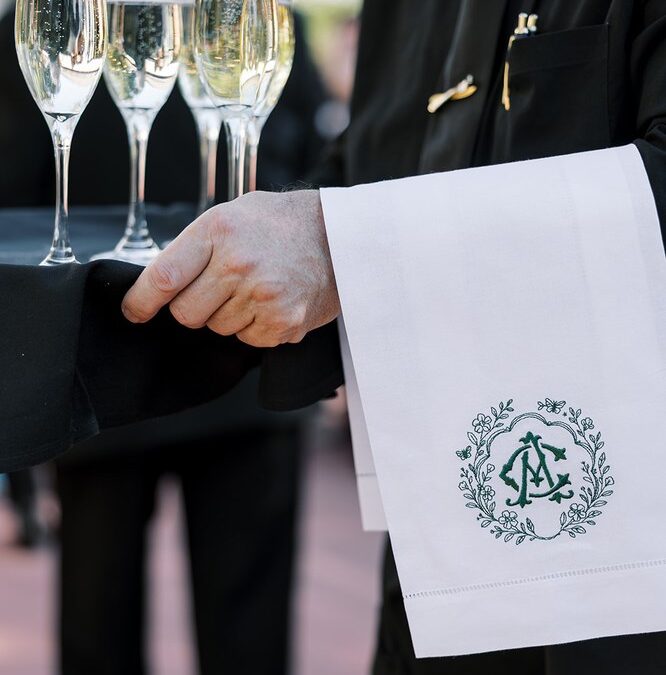
The first time we hand a couple their finished mark on paper — printed small, in the corner of a stationery mockup — something quiet happens. They look at it for a second longer than they mean to. Sometimes one of them touches the page. It has stopped being their two initials and started being something else. It is theirs now.
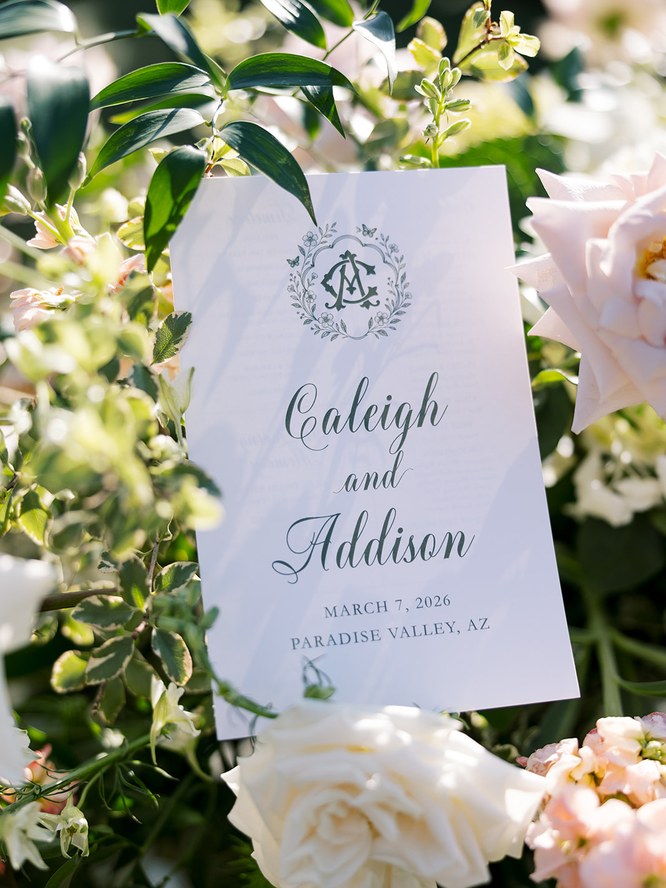
That reaction is why we design a mark for almost every wedding we take on. Not a logo. A mark. A small, personal piece of design that belongs to the couple and only to the couple, and that shows up in a dozen places across their wedding without ever announcing itself. If you have ever noticed the tiny detail at the top of an especially beautiful wedding invitation and wondered who designed it, you were noticing this.
A mark is not a monogram, exactly
We use the word monogram loosely, but a wedding mark is broader than that. It might be a monogram — two intertwined letters set in a hand-drawn script. It might be a small emblem: a pair of olives, a botanical, a compass. It might be a wordmark spelling the couple’s first names in a bespoke typeface. Sometimes it is all three, working together — a primary mark, a secondary mark, and a small ornament for accents. What matters is not which form we land on. What matters is that the mark belongs specifically to this couple and this wedding, and that it holds up at every size from an envelope liner to a six-foot welcome sign.
What a good wedding mark does
The mark is doing three quiet jobs at once, and it is worth naming them, because knowing what it is doing changes what it needs to look like.
It sets the tone. Before a guest reads a single word on your save-the-date, they have taken in the mark. A serif in warm gold reads differently than a hand-lettered black-ink script, which reads differently again from a modern geometric monogram. The mark is the first thing a guest meets, and the first thing that tells them what kind of wedding this is going to be.
It creates a through-line. Weddings have a lot of pieces. Save-the-date, invitation suite, ceremony programs, menu cards, place cards, bar signs, seating chart, thank-you notes. Without a mark, each piece can end up looking like a variation on the same idea rather than parts of one thing. The mark is the visual thread. When a guest picks up their place card at the reception and sees the same small emblem they first saw on the save-the-date nine months earlier, the whole wedding clicks into place for them, even if they cannot say why.
It becomes a keepsake in its own right. Long after the wedding, the mark is the piece of the day couples ask us to reprint on their first anniversary card, on a small framed piece for the entryway, on a Christmas card the following December. A well-designed mark outlives the wedding.
What we would gently push back on
Two things we see couples want, and gently steer away from. The first is a mark that leans too hard on a specific trend. Trends read fast now and date fast later, and a mark you will still love in the wedding album ten years from now is worth more than a mark that photographs well on Instagram this fall. The second is trying to do too much — cramming initials, dates, venues, and florals into one dense little emblem. The best marks are small and quiet. They leave room for the wedding itself.
Let’s talk
We’d love to hear about the two of you and start creating a mark that belongs specifically to your wedding. Reach out at beinlovedesigns@gmail.com and we’ll begin there.