
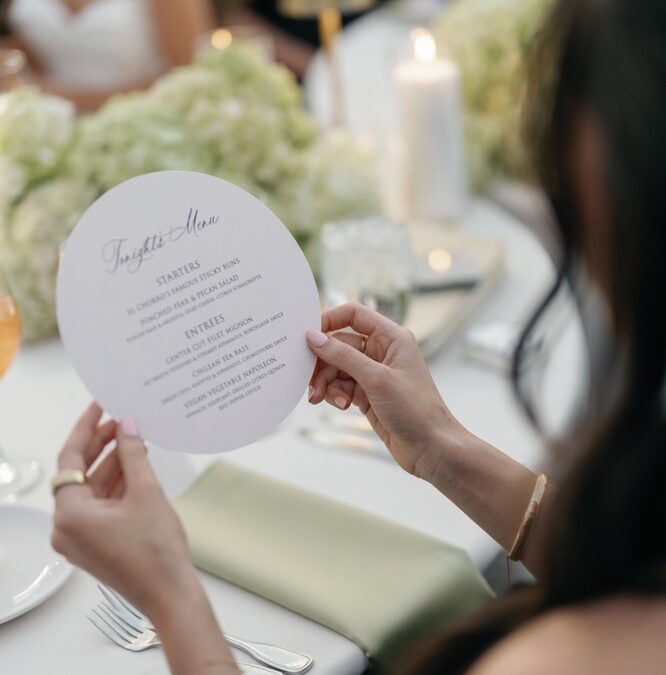
By the time a couple reaches the last month of planning, the invitations have been mailed, the replies are trickling in, and the big decisions are made. Then someone asks about menus. And escort cards. And whether there’s a sign for the bar, and what the tables are going to be numbered with.
It’s a familiar scramble, and it’s the one part of wedding paper that tends to get designed under deadline. Which is a shame, because day-of paper is the stationery your guests actually spend time with.
The Difference Between Mailed and Held
An invitation does its work in about a minute. It arrives, it’s opened, it’s admired, and it goes on the refrigerator or into a drawer.
Day-of paper works differently. A menu card sits in front of someone through three courses. A ceremony program is in their hands for the entire ceremony. An escort card is the first object they touch after walking into the reception. These pieces get read, turned over, and photographed — and they’re what makes a room feel finished rather than merely decorated.
If the invitation is the promise, the day-of paper is the evidence.
The Pieces Worth Planning Early
Not every wedding needs all of these. But it’s worth deciding deliberately which ones you want, rather than discovering the list in the final fortnight.
Escort and place cards. The entry point to the reception, and the first design moment of the evening. There’s real range here — calligraphed cards on a table, a single display board, tags tied to something, cards set at each place. This is often where couples let the design get most expressive.
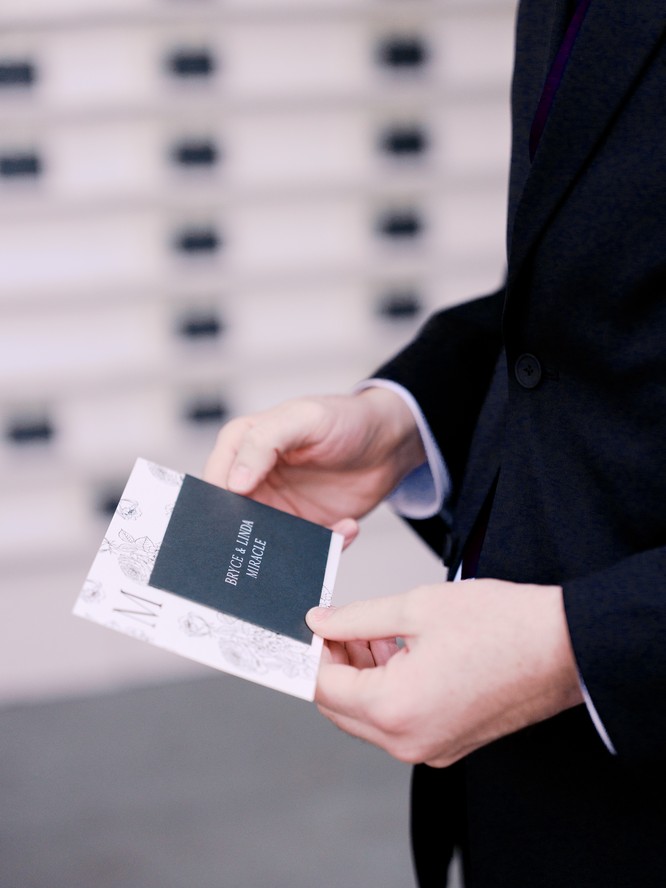
Menus. The piece with the longest dwell time of anything on your tables. A menu can sit on the plate, tuck into a napkin, or double as a place card. It’s also the natural home for a small personal touch — a line about the meal, a note of thanks, a nod to a family recipe.
Ceremony programs. Useful when the ceremony has elements guests should follow, and genuinely lovely when there are people to honor — readers, musicians, family who couldn’t be there.
Signage. Welcome signs, seating displays, bar menus, directional signs for a venue with more than one space. Signage is the most practical category and the one most often assembled last from mismatched sources, which is exactly why it stands out when it isn’t.
The small things. Table numbers, cocktail napkins, favor tags, thank-you cards. Individually minor, collectively the difference between a designed day and a decorated one.
Why It Should Be Designed With the Invitation
Here’s the case for planning the day-of pieces early: the design work is already done.
When your day-of paper is developed alongside your invitation suite, the palette, the typefaces, the paper stock, and the motifs are settled. The menus and the signage become extensions of a decision you’ve already made rather than a fresh round of choices in your busiest month — and the day reads as one continuous idea, from the envelope that arrived in spring to the sign at the bar.
Designed separately and late, day-of paper tends to drift. A different typeface because the vendor didn’t have the original. A white that isn’t quite the same white. Nobody at the wedding names it, but the room feels slightly less pulled together, and the couple usually notices in the photographs.
This is the same argument for treating the invitation as the opening statement rather than a task to complete — what your invitations are really doing is setting a language the rest of the day either speaks or doesn’t.
A Practical Timeline
For a fall or winter wedding, the workable rhythm looks like this: settle the day-of pieces in concept when you approve your invitation design, revisit the list about ten weeks out once the venue layout and menu are firm, and go to print three to four weeks before the date — after the guest count settles but with room for the pieces that depend on final seating.
It’s a small amount of thinking done early, and it removes the scramble entirely.
Let’s Talk
We’d love to hear about your day and the pieces you’re imagining for it. Reach out at beinlovedesigns@gmail.com.